
Quick answer. Forest bathing, or shinrin-yoku, is the practice of spending slow, unhurried time among trees with all your senses open. It is not exercise or a hike. A deodar cedar forest in the Himalayas is an ideal setting because it is quiet, cool and rich in scent and sound.
What forest bathing actually is
Forest bathing began in Japan in the 1980s as shinrin-yoku, which translates roughly as taking in the forest atmosphere. The idea is simple: you go into woodland without a goal, a step count or a destination, and you let the place work on you. You walk slowly, stop often, and pay attention to what you see, hear, smell and touch.
It is deliberately the opposite of a workout. Nobody is trying to reach a summit or finish a trail. The only task is to notice.
Why a deodar forest suits it so well
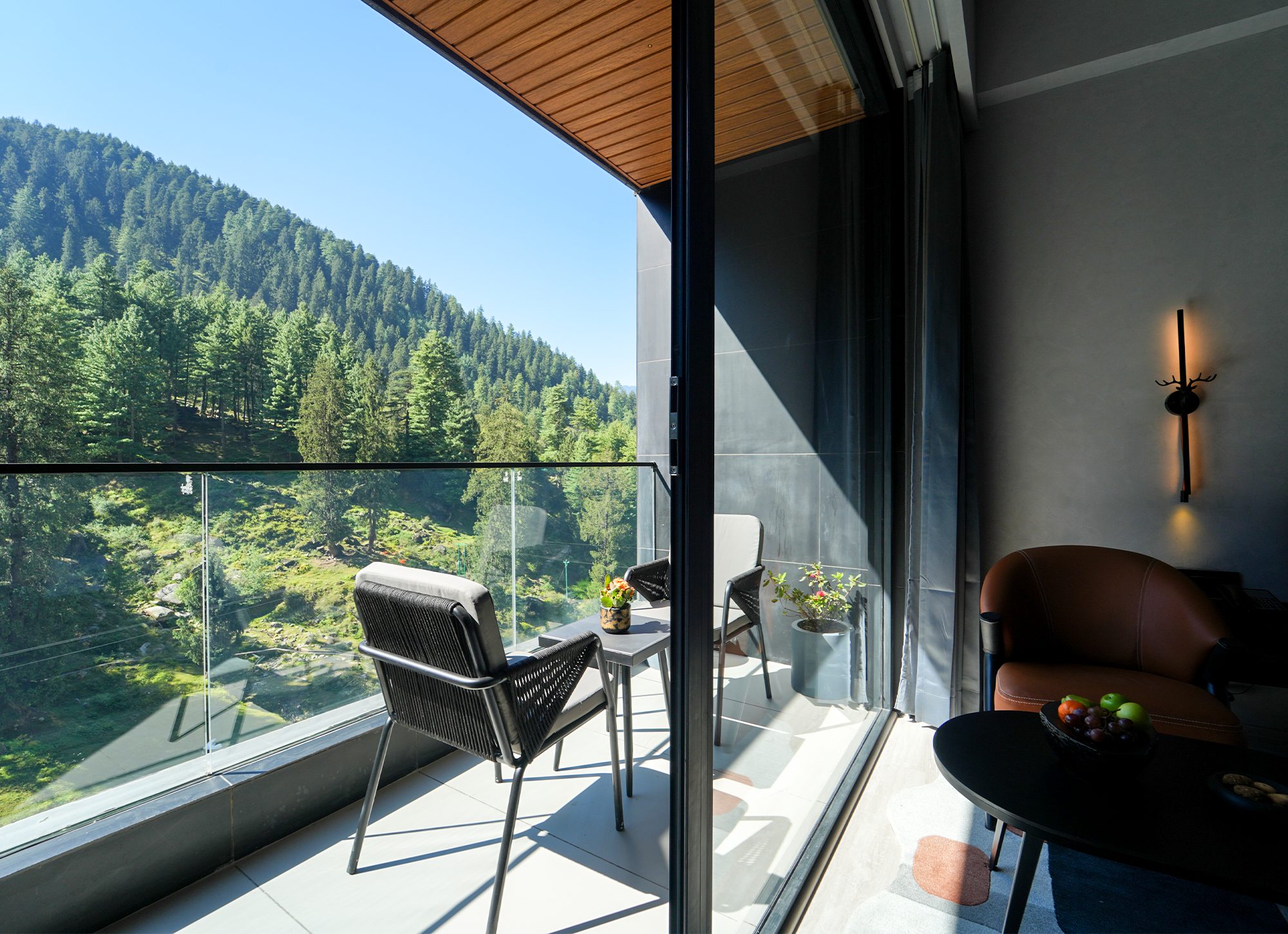
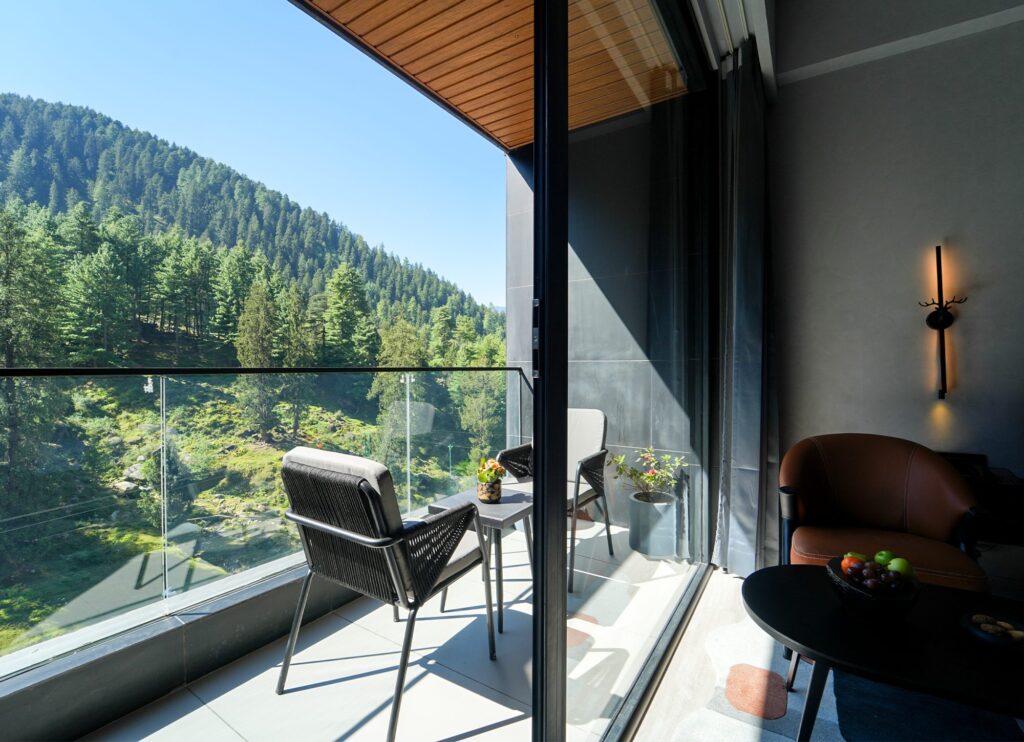
The deodar, the Himalayan cedar, is a tall, calm tree with layered, drooping branches and a resinous scent that you notice the moment you step beneath it. Deodar forests are dense enough to hush the wind and open enough to let shafts of light through. Add the sound of a river below and you have a setting that makes slowing down feel natural rather than forced.
Ajna sits within a protected reserve forest above the Beas, which means the trees around the resort are not decoration. They are the setting for the whole stay, from the view out of your window to the morning walk.
What research suggests, and what it does not
Studies on time spent in woodland, much of it from Japan and Korea, report associations with lower self-reported stress and better mood. These are modest, early findings and forest bathing is not a medical treatment. What most people can say from experience is simpler: after an hour among trees, the mind is quieter and the body is less hurried.
How to practise it, step by step
- Leave the phone in your pocket, silenced. Photos can wait until the end.
- Walk very slowly for the first ten minutes. Slower than feels natural.
- Stop when something draws you: bark, moss, a patch of light, a bird call.
- Use each sense in turn. What can you hear at the furthest distance, and at the nearest? What does the air smell like?
- Sit for ten or fifteen minutes in one spot and simply stay.
- Finish with a few deep breaths before heading back.
Make it a morning habit
Early morning is the best time. The forest is quiet, the air is cool and the light is low. Even twenty minutes before breakfast changes the rhythm of the day. Our guided forest bathing sessions and nature walks are led at an easy pace, so you do not need any experience.
Combine the forest with other kinds of rest
Forest time works well alongside other slow practices. Many guests follow a morning among the trees with yoga or meditation, then a spa treatment in the afternoon. The wellness programme at Ajna is built around that kind of gentle sequence rather than a packed itinerary.
Bringing the forest home
The benefit of an hour among trees fades if the rest of life stays hurried, so take a small habit back with you. Find the nearest patch of green, however modest, and spend ten minutes there each week doing nothing in particular. Notice one tree properly: its bark, its shape, the way light moves through it. The skill of attention is the same whether the tree is a Himalayan deodar or a neem outside your office.
Many guests also keep a short list of what they noticed during their stay, such as the smell after rain, the first bird call at dawn or the colour of the river at dusk. Reading it later is a quick way to return to the forest in your mind.
What to wear and bring
- Comfortable closed shoes with grip; forest paths can be damp.
- A light layer, even in summer; it is cooler under the trees.
- A small bottle of water.
- A notebook, if you like to write, but nothing else.
Frequently asked questions
Is forest bathing the same as hiking?
No. Hiking is about covering distance. Forest bathing is slow, sensory and goal-free, with long pauses and very little distance.
Do I need to be fit or experienced?
Not at all. The pace is gentle and sessions can be adapted to any age or fitness level.
What is the best time of year for forest bathing in Manali?
The forest is lovely year-round. Spring and autumn offer the most comfortable weather, while the monsoon brings an intense green and winter a hushed, cold stillness.

Notes from the team at Ajna, a Beas river-facing forest retreat in Manali. We write about the mountains we live in, from seasons and food to wellness and weddings.
Stay with us at Ajna
Forest-view rooms, a full spa, DHAM’s organic kitchen and the Beas at your doorstep.
Keep reading
Yoga & Meditation Retreats in the Mountains: What to Expect
Thinking about a yoga or meditation retreat in the Himalayas? Here is what a typical day looks like, who it suits, and how to prepare for a mindful mountain stay.
Read the story
Corporate Retreats & Offsites in Manali: Why the Himalayas Work
Why teams choose the Himalayas for retreats and offsites, how to plan the agenda, and what to look for in a venue in Manali.
Read the story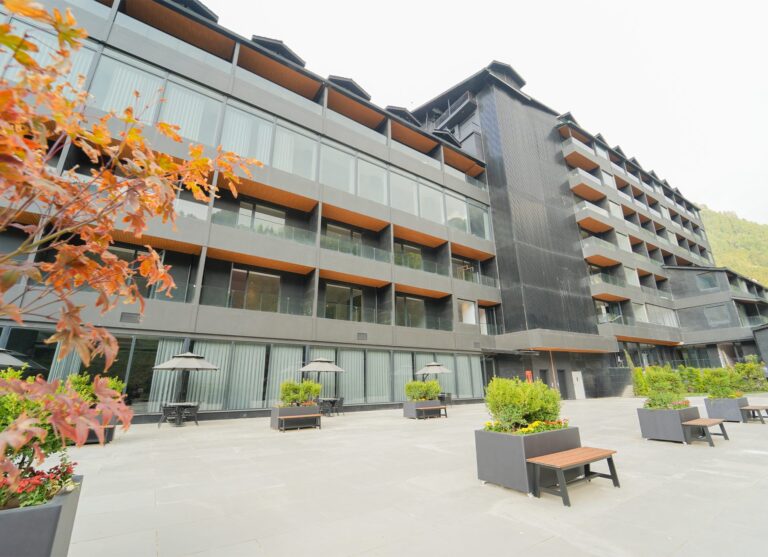
What to Pack for Manali in Every Season
A practical packing list for Manali in every season, with advice on layers, footwear, medicines and small extras that make a mountain stay more comfortable.
Read the story